Pablo Picasso famously observed that every child is an artist. He noticed that the real problem is how to remain an artist once we grow up. For a long time, society assumed that putting colored pencils to paper was a milestone we were supposed to outgrow alongside recess and cartoon pajamas. But a massive cultural shift has proven otherwise. Walk into any bookstore, coffee shop, or airport terminal today, and you will spot adults happily shading between intricate lines. It turns out that breaking out the vibrant hues is not just child play, it is a scientifically backed wellness powerhouse. There is a profound neurological explanation for why coloring books are perfect for all ages, bridging the gap between youthful imagination and adult stress management.
By looking at how our brains respond to the simple act of focusing on a design, researchers have unlocked fascinating insights into mindfulness and cognitive health. Far from being a fleeting trend, pulling out a set of markers offers universal appeal that makes perfect sense whether you are seven or seventy.
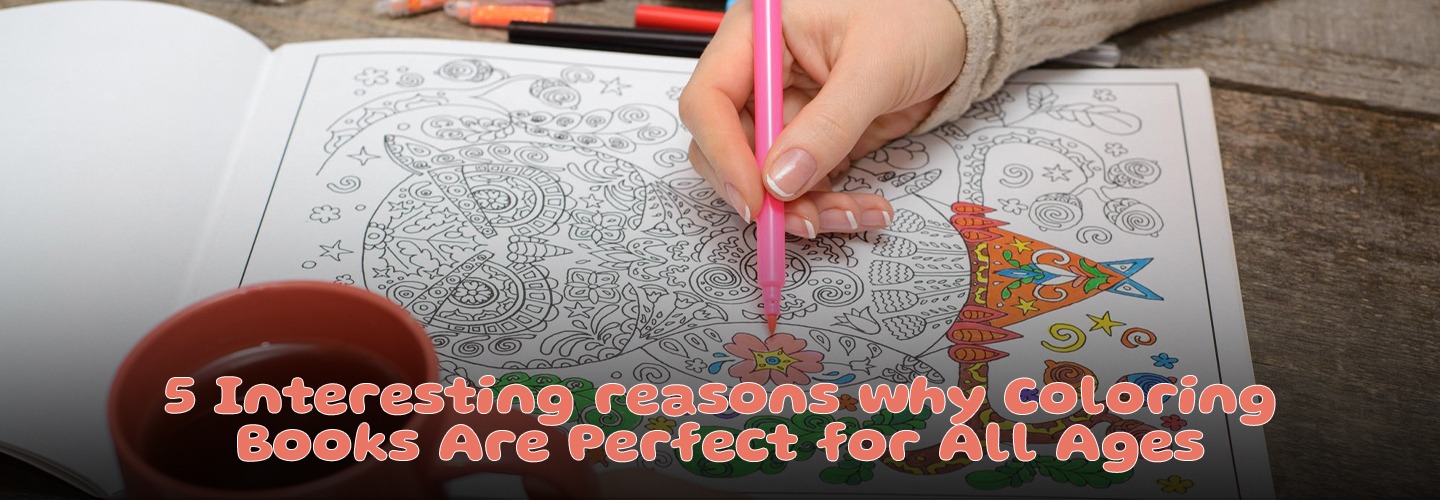
5 Interesting reasons why coloring books are perfect for all ages
To understand why this activity has captured the global imagination, we must look at the psychological, neurological, and physical transformations that occur when we create. Modern clinical research reveals that filling geometric patterns with color alters brainwave activity, turning a simple past-time into a cross-generational wellness tool.
1. It Switches Off the Brain’s Fire Alarm
Our brains are constantly bombarded with notifications, deadlines, and daily anxieties, keeping our nervous system in a state of high alert. This is where the true magic of creative focusing comes into play. When you sit down with a detailed illustration, your amygdala, which is the brain’s emotional center that registers fear and processes stress, gets a much-needed break.
Clinical trials demonstrate that structured coloring of complex geometric patterns drops state anxiety levels by significant margins compared to standard unstructured free-form doodling. By focusing on staying within the lines, you give your mind a single, predictable task. This structured focus lowers your heart rate and slows down racing thoughts. For children, it creates a safe space to process big emotions. For adults, it acts as a mental decompression chamber, proving that this simple creative outlet is a brilliant tool for anyone looking to quiet a noisy mind.
2. Enter the Dopamine-Fueled Flow State
Have you ever become so absorbed in an activity that hours flew by in what felt like minutes? Psychologists call this a flow state, a highly beneficial mental condition where you are fully immersed and energized by the present moment. Coloring is a direct pathway to achieving this state because it strikes the perfect balance between a low-stakes challenge and an immediate reward.
A comprehensive clinical trial published via PubMed Central titledThe effects of coloring therapy on patients with generalized anxiety disorder analyzed how structured design engagement affects brain states. The research demonstrated that repetitive, low-stakes creative tasks trigger an immediate reduction in anxiety scales while increasing positive psychological affect. As you navigate the patterns, your brain releases small bursts of dopamine, the feel-good neurotransmitter associated with pleasure and accomplishment. This reward loop occurs regardless of your technical skill level. You do not need a degree in fine arts to create something beautiful, which removes the performance anxiety that often blocks people from trying traditional art forms.
3. Customized Sketches Deepen Emotional Connection
Not all coloring pages are created equal, and the type of art you interact with heavily dictates its therapeutic value. Moving away from generic mass-produced books toward personalized, standalone sketches offers profound cognitive advantages. When individuals interact with tailored sketches, their level of personal investment and focus skyrockets.
A narrative synthesis study by researchers Helen Gruber and Michael Oepen published in The Arts in Psychotherapy, titledEmotion regulation strategies and effects in artmaking, explores how individuals utilize structured art templates to regulate mood. The research highlights that when a subject recognizes or feels an explicit personal connection to the line-art sketch template, the brain activates deeper neural pathways associated with long-term memory and self-referential thought.
Engaging with clear, high-contrast sketches allows the mind to map out spatial relationships more effectively. This visual clarity reduces cognitive fatigue, making specialized sketches an exceptionally powerful medium for children building visual recognition and older adults practicing memory retention through customized imagery.
4. A Complete Workout for Fine Motor Skills
While it feels like pure entertainment, handling those shading tools is actually a sophisticated workout for your hands and mind. The action requires both hemispheres of the brain to communicate seamlessly. Choosing colors activates the analytical left hemisphere, while blending tones and interacting with spatial shapes sparks the creative right hemisphere.
Furthermore, the physical act builds and preserves fine motor skills. In young children, holding a pencil refines the grip strength and hand-eye coordination necessary for writing. On the other end of the spectrum, occupational therapy trials indicate that regular, precise hand movements preserve joint flexibility.
Keeping the fingers engaged in controlled movements helps adults maintain grip dexterity and delay the progression of physical joint stiffness. It keeps the mind-muscle connection sharp, proving that keeping your hands busy has structural benefits that run far deeper than the surface of the page.
5. The Ultimate Digital Detox Companion
We live in an era dominated by glowing screens, blue light, and algorithmic feeds designed to scatter our attention spans. This constant digital consumption strains our eyes and exhausts our mental energy. Engaging with physical or thoughtfully designed printable media provides a necessary analog escape.
Data tracking mindfulness and media consumption reveals that stepping away from digital feeds to engage with physical design pages creates a measurable baseline for mindfulness. Swapping a smartphone for a physical sketch page eliminates the temptation to endlessly scroll, allowing your eyes to rest from harsh glare. Because the activity requires physical coordination, it keeps your hands occupied and away from the urge to check notifications. Many people find that spending twenty minutes with a design before bed dramatically improves their sleep quality, as it encourages the natural production of melatonin rather than suppressing it with screen light.
The beauty of this movement lies in its accessibility. It requires no expensive training, no prior expertise, and no rigid rules. It is a democratic form of self-expression that welcomes everyone with open arms, providing distinct emotional and neurological perks at every single stage of life.
Conclusion
When we evaluate the scientific data surrounding stress reduction, cognitive preservation, and mindfulness, it becomes undeniable that why coloring books are perfect for all ages. They serve as a rare bridge between generations, offering a shared activity where a child and a grandparent can sit side by side, working on the exact same project while reaping their own unique mental rewards.
Ready to experience these therapeutic benefits yourself? Head over to Coloring Grove, where you can instantly transform your favorite photographs into personalized sketches.
Frequently Asked Questions
What are the primary benefits of coloring for adults?
Medical research shows this activity mimics meditation by redirecting focus away from personal anxieties onto a structured task. It calms the amygdala, lowers cortisol, improves sleep quality, and provides a healthy, low-stakes psychological outlet.
Why coloring books are perfect for all ages as a shared family activity?
This screen-free medium removes skill barriers, letting generations create together. While children refine motor skills, adults relieve stress. It eliminates digital distractions, encouraging meaningful family conversations and cross-generational bonding.
What kind of coloring books can I make from Coloring Grove?
With Coloring Grove you can turn personal drawings, superheroes, or memories from weddings, birthdays, and special occasions into custom collections. We convert your photos into clean sketches, ready to download as individual pages or compiled books.